
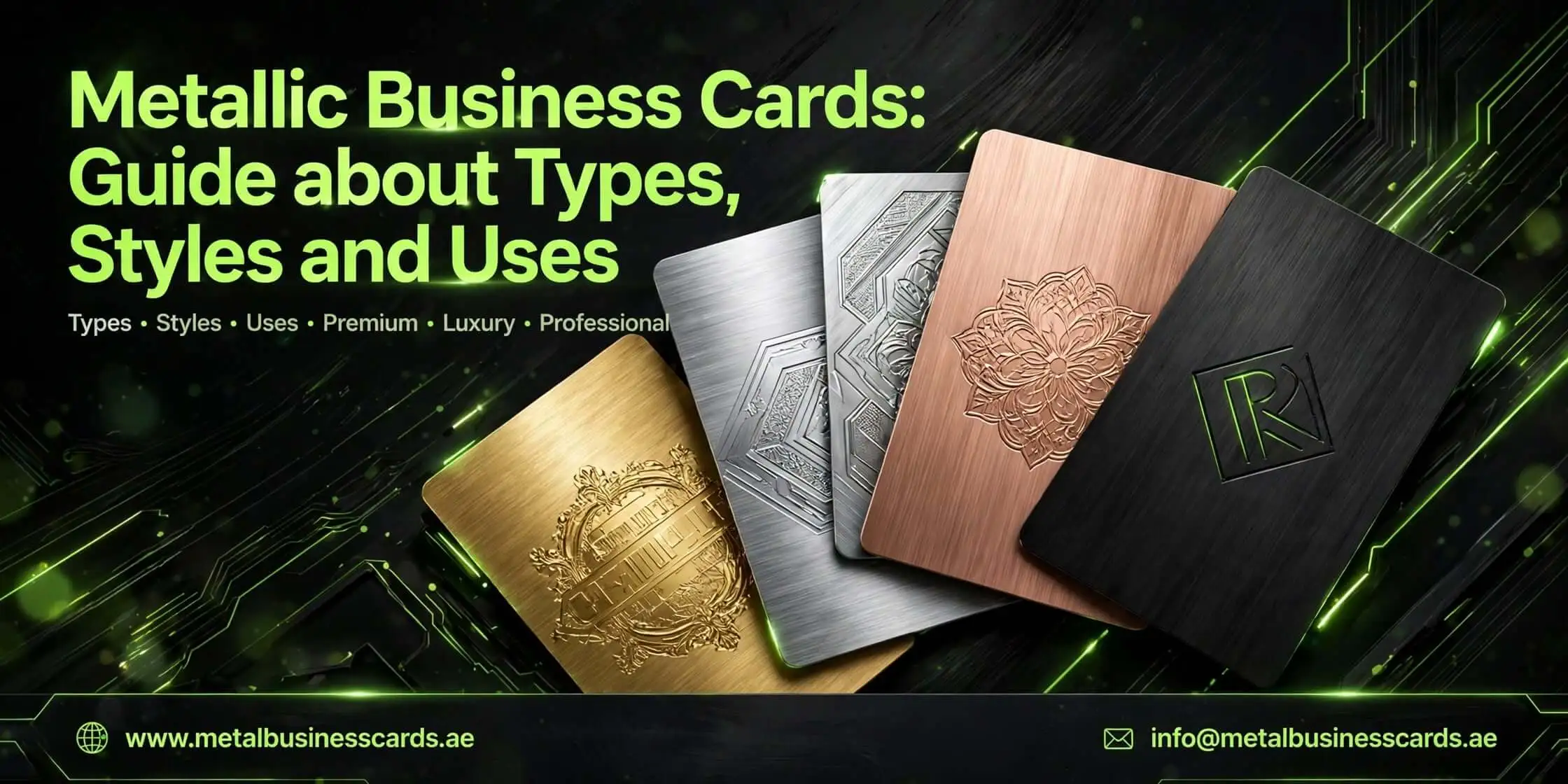
Metallic Business Cards: Guide about Types, Styles and Uses
A metal business card feels different the moment someone holds it. It has weight and a cool surface, and the edges stay sharp long after a paper card would have softened in a wallet.
Picking one is where it gets confusing. The colour on the surface and the metal underneath are two separate choices, and each changes how the card wears and feels in your hand. This guide explains the main types and styles and where each one fits best.
What Is a Metal Business Card?
A metal business card is a card cut from a thin sheet of metal instead of printed on paper. It is usually stainless steel, aluminium or brass, and it comes in the same standard size as a paper card so it still fits a wallet or cardholder.
The details are added after the metal is cut. Three methods are common:
- Laser engraving burns the text or logo into the surface
- Etching cuts the design into the surface using a chemical process
- Colour printing adds logos and brand colours on top
Because the card is solid metal, it feels heavier, does not tear or soak up moisture, and holds its shape better than paper. Metallic business cards and metal cards mean the same thing.
Metal Cards Come in Four Main Materials
Most metal cards are made from one of four materials. The material decides how heavy the card feels, how stiff it is and how it ages over time. Stainless steel is the usual starting point, while aluminium is the lighter option for cards handed out in large numbers.
| Material | Feel | Durability | Best for |
| Stainless steel | Heavy and stiff | Resists rust and bending | Executives, lawyers, consultants |
| Aluminum | Light with a slight flex | Can bend under pressure | Events and bulk handouts |
| Brass or copper | Heavy with a warm tone | Darkens with age | Hospitality, real estate, private clubs |
| Gold plated steel | Same weight as steel | Steel strength with a gold surface | VIP and premium client cards |
Aluminium takes colour well but is softer than steel, so it marks more easily with daily use. Stainless steel needs almost no care, while brass and copper may need an occasional wipe to keep their shine. Solid brass and copper change colour as they age, and some people like that look. Plated cards avoid this by putting a gold or rose gold surface on a steel base, so you get the look without the extra weight. If you are comparing metallic business cards, start with how and where the card will be handed out. That usually narrows the choice to one or two rows.
Your Chosen Finish Determines How the Card Looks and Feels
The finish is the first thing people see and touch. It also decides how well the card handles daily use so it is worth choosing with the same care as the metal.
Brushed and Matte is a Classic Combo
Brushed metal has fine lines running in one direction. They hide light scratches and fingerprints, which helps when cards sit in a cardholder or a bag. Matte has a flat, even surface with no shine. It suits a plain layout and looks understated, especially in black or silver.
Mirror and Textured Have an Elegant Vibe
Mirror finish is polished until the card works like a small mirror. Thumbprints show straight away and a quick wipe clears them but the fine scratches from a bag or cardholder stay. Bold, simple lettering reads best against all that reflection.
A sandblasted or textured card is the better pick if it carries a QR code. With no glare off the surface, a phone camera can scan it under shop or event lighting without the card being tilted.
Engraving and Cutouts
Design work is added on top of the finish. Three options are common:
- Laser engraving: Text or a logo burned into the metal, so it does not rub off
- Colour fill: Brand colours added to engraved or printed areas
- Cutouts: A logo or shape cut through the card, best kept bold and simple because thin sections can bend
Brushed metal with engraved text is a safe combination for cards that get handled often. Mirror finish is better kept for cards that are handed over carefully.
Metal Cards Suit Different Professions
The right card depends on who receives it and where it is handed over. A broker giving cards to clients at a showroom needs something different from a consultant who attends several events in one week.
| Profession | Material | Finish |
| Real estate | Brass or gold plated steel | Matte or brushed |
| Hospitality and private clubs | Brass or plated steel | Mirror |
| Legal and finance | Stainless steel | Brushed |
| Consultants and sales | Stainless steel or aluminium | Matte |
| Tech and creative | Aluminium or black steel | Textured |
In the UAE, meetings often start with small talk, and a card is usually read before it is put away. It is passed and received with the right hand or both hands, then placed on the table in front of you instead of going straight into a pocket. Showing the Arabic side facing up is considered polite, so many professionals keep English on the front and Arabic on the back. That is simple to do with metallic business cards because both faces can carry engraving.
Thickness and Size Can Affect the Final Feel
Two measurements decide how a metal card feels in your hand. How thick it is and how large it is. Thickness changes the weight and stiffness while size decides whether the card fits a cardholder and leaves enough room for your details.
Thickness
Most printers offer three options, and each one suits a different use:
- 0.3 mm: Light and easy to carry in bulk, and thin metal cuts cleanly, so it works well for die-cut shapes
- 0.5 mm: The usual choice, clearly heavier than paper but still thinner than a plastic bank card
- 0.8 mm: Close to bank card thickness, with a weight that suits cards handed to clients one at a time
Size
The standard size is 3.5 x 2 inches, the same as a paper card, so it fits any existing cardholder. Printers can differ slightly and shaped cards have their own limits, so ask for the template before you start the design. Keep text and logos a little away from the edges so nothing gets trimmed.
NFC Cards Need a Different Build
A tap works when a phone reaches a small antenna inside the card. Solid metal blocks that signal, so a chip stuck on the back of a plain metal card will not read.
How Metal NFC Cards Are Built
Working cards use one or more of these:
- Shielding layer: A thin ferrite layer sits between the metal and the chip so the signal can pass
- Non-metal window: A small section of plastic or other non-metal material holds the chip
- Thicker body: Some makers use a heavier card to fit the extra layers inside
Custom NFC Business Cards are built this way from the start, and the chip usually links to a profile page that you can edit later without reprinting.
Test a Sample First
Phones read from slightly different spots on the back so tap a sample on a few phones before placing a bulk order. If the tap feels unreliable, ask the printer to adjust the chip position.
Five Steps to Order Your Card
Ordering a metal card is easier when the decisions come in the right order. Each choice narrows the next one so you avoid redoing the artwork or changing the material after the proof is ready.
- Decide where the card will be used. A card for client meetings, one for events and one with tap sharing each lead to different choices.
- Pick the metal and finish. Use the materials table and finish notes above. Stainless steel with a brushed finish is a safe starting point.
- Set the thickness and NFC. Go with 0.5 mm unless you want a lighter or heavier card. If you want tap sharing, tell the printer now because it changes how the card is built.
- Prepare the artwork. Printers usually ask for vector files with fonts converted to outlines which is standard for metallic business cards because engraving follows clean lines. Leave a small margin around the edges.
- Approve the proof and order. Check spelling, phone numbers and the Arabic side if you have one. Engraved errors cannot be undone, so read the proof slowly.
A Professional Printer Saves You Rework
Metal cards cannot be reprinted cheaply once they are engraved, so a mistake costs the whole batch. A printer who works with metal every day catches problems before production starts.
Here is what a good printer usually handles:
- Artwork checks: Thin lines, small text and logos too close to the edge are flagged before engraving
- Test engraving: The design is tried on the chosen finish, since brushed and mirror surfaces take engraving differently
- Proofs: You see the layout and spelling before anything is cut
Ask for a physical sample before a bulk run. Holding it shows you the weight, contrast and readability in a way a screen proof cannot.
Common Questions About Metallic Business Cards
What are metal business cards made of?
Most are made from stainless steel, aluminum, brass or copper. Some use plated steel to get a gold or rose gold look without the weight of solid brass. Stainless steel is the most common base because it resists rust and holds its shape.
Are metal business cards worth it?
They cost more than paper, so they make the most sense when each card goes to someone you want to keep in touch with, such as a client or a partner. For large giveaways, a lighter aluminum card or a paper card may suit the budget better.
What is the right thickness for a metal business card?
A 0.5 mm card suits most people because it feels solid and still fits a wallet. A 0.3 mm card works for cutout designs and bulk handouts while 0.8 mm gives a heavier feel for clients.
Can a metal business card have NFC?
It can but the card needs a shielding layer or a non-metal window for the chip, since plain metal blocks the signal. Test a sample on a few phones before placing a bulk order.
How long does a metal business card last?
Metal does not tear or soak up moisture, so the card keeps its shape much longer than paper. Finishes wear differently, though. Brushed hides scratches, mirror shows them, and brass darkens with age.
Conclusion
Choosing a metal card is simpler than it looks. Think about who will receive it and where you will hand it over, and the material, finish and thickness start to fall into place. A brushed steel card suits someone who gives out cards every week, and a brass card with a mirror finish suits a showroom or a private club.
If you are still unsure, ask a printer for a sample. A minute with the card in your hand usually settles the choice.

As a content specialist for MetalBusinessCards.ae, I focus on sharing insights into premium metal business cards, luxury branding, and modern identity solutions. My work highlights design trends, materials, and creative strategies that help businesses build strong, memorable brand impressions.